Gifts for Gardeners

I suppose one could only assume this is my personal wish list for Santa Clause this year.  It’s not necessarily so, as I’m a custom / made to order freak!  I love these ideas I’m about to share with you, so get excited!  🙂

Daniel Ratcliff art

I met this very young gentleman at the Campbell Farmers Market about a month ago and purchased one of his prints called “Horsetail with Dragonfly”.  He ‘s such a pleasant guy to talk to.  Anyways, his art is astoundingly detailed and beautiful.

http://www.etsy.com/listing/82110308/dandelion-with-butterfly

Dandelion with Butterfly

Paula Hayes

Paula Hayes is an interesting one since her works of art vastly vary in scale.  She designs flora inspired little terrarium necklaces  to  huge modern art museum installations.  Check her out at her website!

http://paulahayes.com/

Plants on Walls – now here’s something I’ve wanted for over a year!

Not only are these living art installations in your home/balcony, they tend to be very low maintenance.  My ideal plants on walls would be on my roof/patio full of native plants from my area (the Bay Area of California).

www.plantsonwalls.com

Terrariums!  Everybody loves them and they’re so trendy now!  The following site is run by Amy Bryant who coauthored the book Terrarium Craft (which I own and LOVE!)

Black Plants.  Great present for the rock n roller or goth in your life.

Propagating Succulents

Something for nothing? This isn’t some medieval alchemy magic trick! This is succulent propagation!

Methods of Propagation:

The Glass is Full Method:

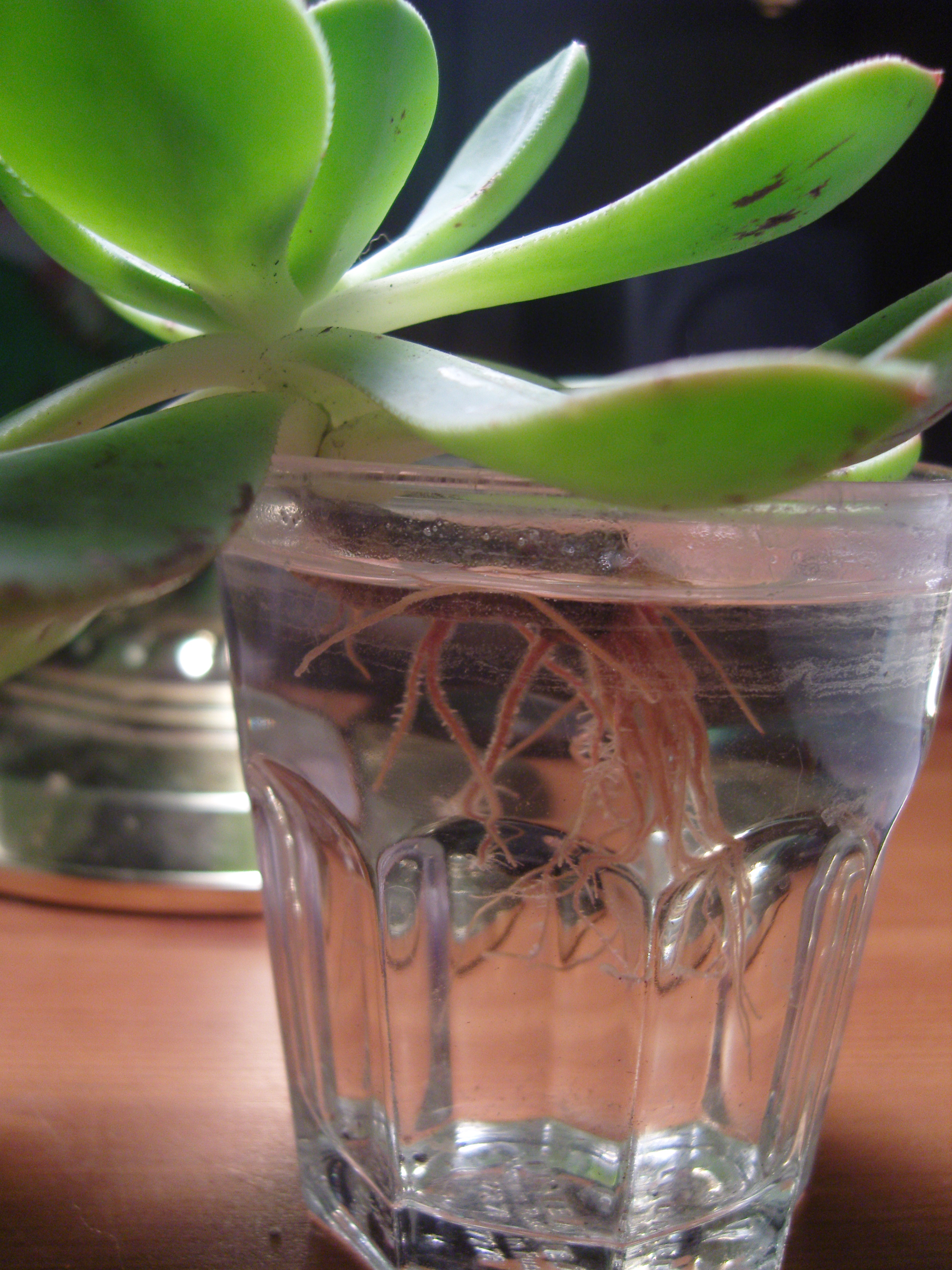
If you’ve gotten a cutting from a friend and it’s mostly stem, let the cut parts callous over. In a month or so, the stem might magically shoot off roots on its own. You can also suspend the rosette head over a glass of water as I have done below. Roots will magically appear! As always, keep your plant out of direct sunlight. Shade and moisture are this baby plant’s BFF (for now). Once healthy roots are established plant your cutting in cactus succulent soil and keep moist in a shaded spot till the plant is established.

Echiveira Rooting 1 (December 15th, 2011
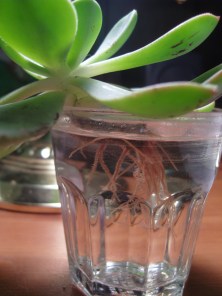
Echeveira roots one month later (January 15th, 2012)

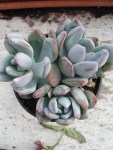
Happy Echeveria

Leaf cuttings:

Leaf cuttings are a very easy and cheap way to propagate your succulents! For leaf propagation you must take a younger but large enough leaf specimen and let it callous over for a few days. Then you simply stick the leaf in the ground about 1/4 of it submersed in the soil. For the next 3-4 weeks, you will want to keep the leaf cutting in a shady, cool,well aerated area and make sure to maintain constant moisture. Remember: No Direct Sunlight! I know that constant moisture may sound like an ironic idea since for an established plant constant moisture is the kiss of death! It will surely rot and turn to mush. For succulent propagation, we’re dealing with a whole set of new rules now. So just trust me on constant moisture & shade. In the next 3-4 weeks, your leaf cutting should grow roots. A basic test to check for root development is to give the cutting a very GENTLE tug and try to feel if there is any resistance. If so, BOOM! We’re in business! You’ve got some healthy roots! In a few more weeks, a baby plant should emerge out of the ground. This plant will use the food stored in the parent leaf cutting to grow. The actual science behind how you can produce a plant from just a leaf cutting is just fascinating and some might say nothing short of a miracle. But I assure you this “magic trick”: getting something for nothing is all based on stem cells. The plant’s leaf is full of these stem cells that can function for whichever purpose the plant needs it to, in order to continue it’s existence. If only human anatomy were that adaptable, eh? One minute the stem cells are used to make roots and the next minute they are used to create and then feed the baby plant. Cool stuff!

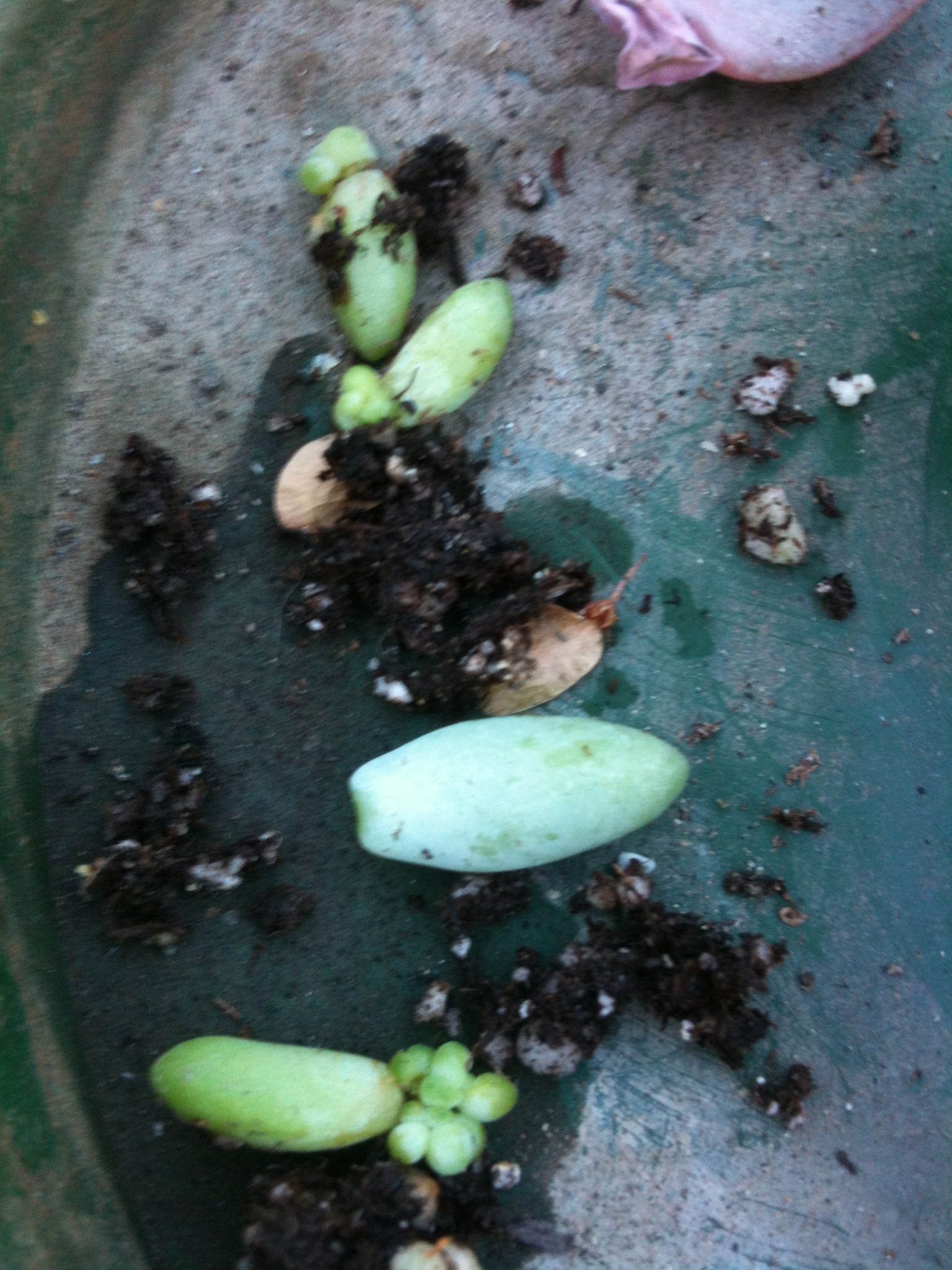
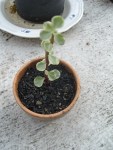
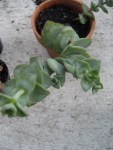
Donkey tail propagating on it’s own

Stem cuttings:

This method is great for succulents that don’t have fleshy leaves. I have been expanding my sedum collection this way. I just take a few long cuttings of the sedums. Then lay the cuttings on the soil. You can cover the stem with soil if you like. I have found that covering the stem with soil speeds up the rooting process. Make sure to moisturize your stem cuttings often and in about 2 weeks you should have some great root development!

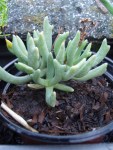
Tricolor Sedum

Division

Division is really simple. When you buy a new plant, just empty out the pot to view how many individual plants are in the pot. They will have their own root systems and should be easily separable. I had purchased a small 4 inch pot of Aloe Vera. I wanted to propagate this plant by dividing it up. Sure enough I found 4 separately established plants in there! Very cool! Pretty much I got 4 individual plants or the price of one
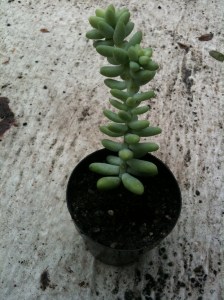
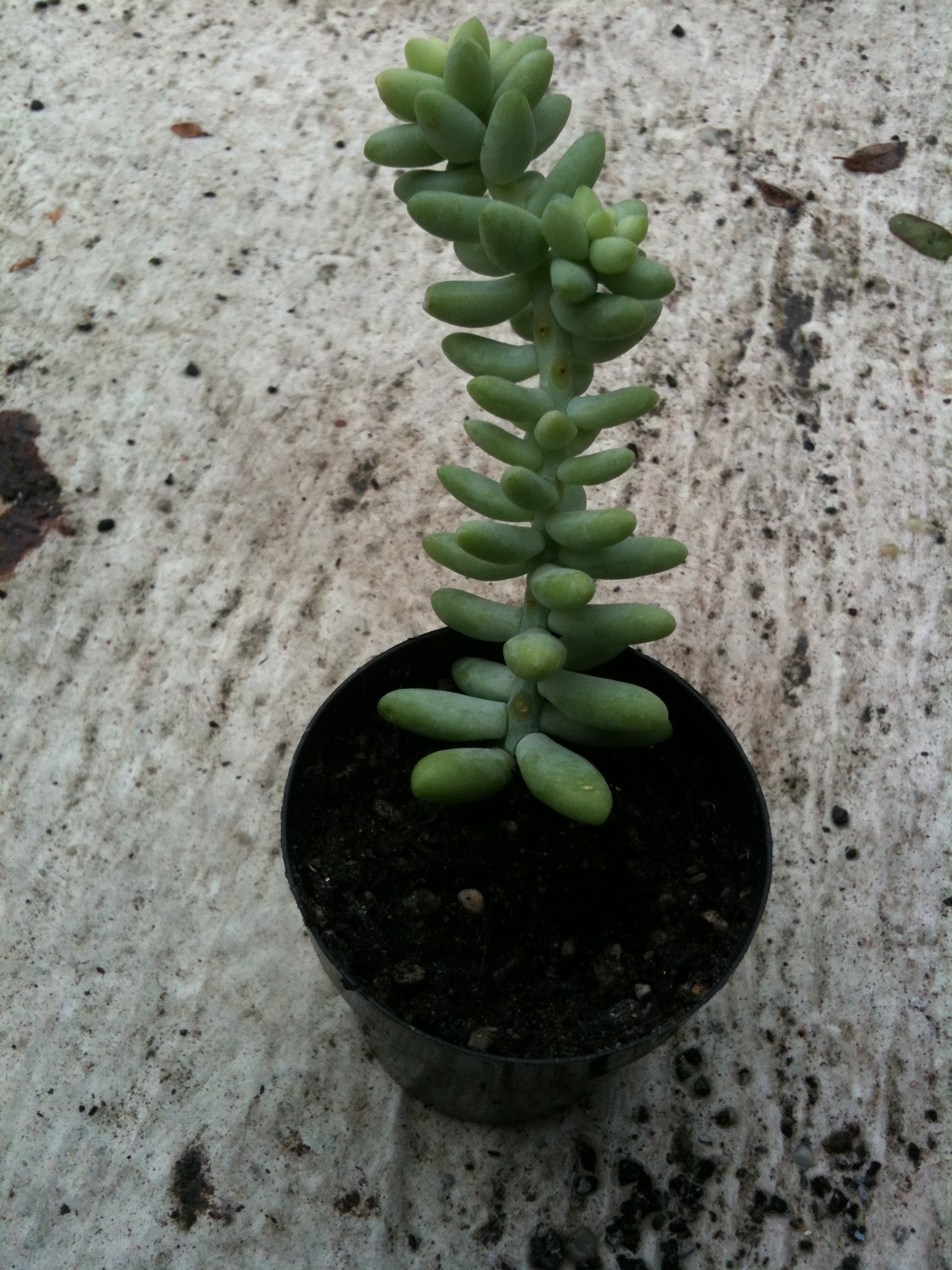
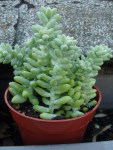
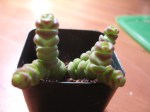
Sedum Burrito Division

Offsets

Offsets are totally rad! I’m still trying to understand how some plants make these. But in the interest of basic propagation info, offsets or “pups” are the plant’s natural method of propagation. If you have established aloes, they seem to be very prolific and have many pups at the stem of the mother plant. These pups will be attached to the mother plant. You can cut these pups off (try to keep things sterile). I personally like dipping the exposed areas into Rooting Hormone. Then I just stick both plants into the soil and water it every 2-3 weeks. Give the offset plant a little tug. If you get some resistance, then we’ve got great root development!

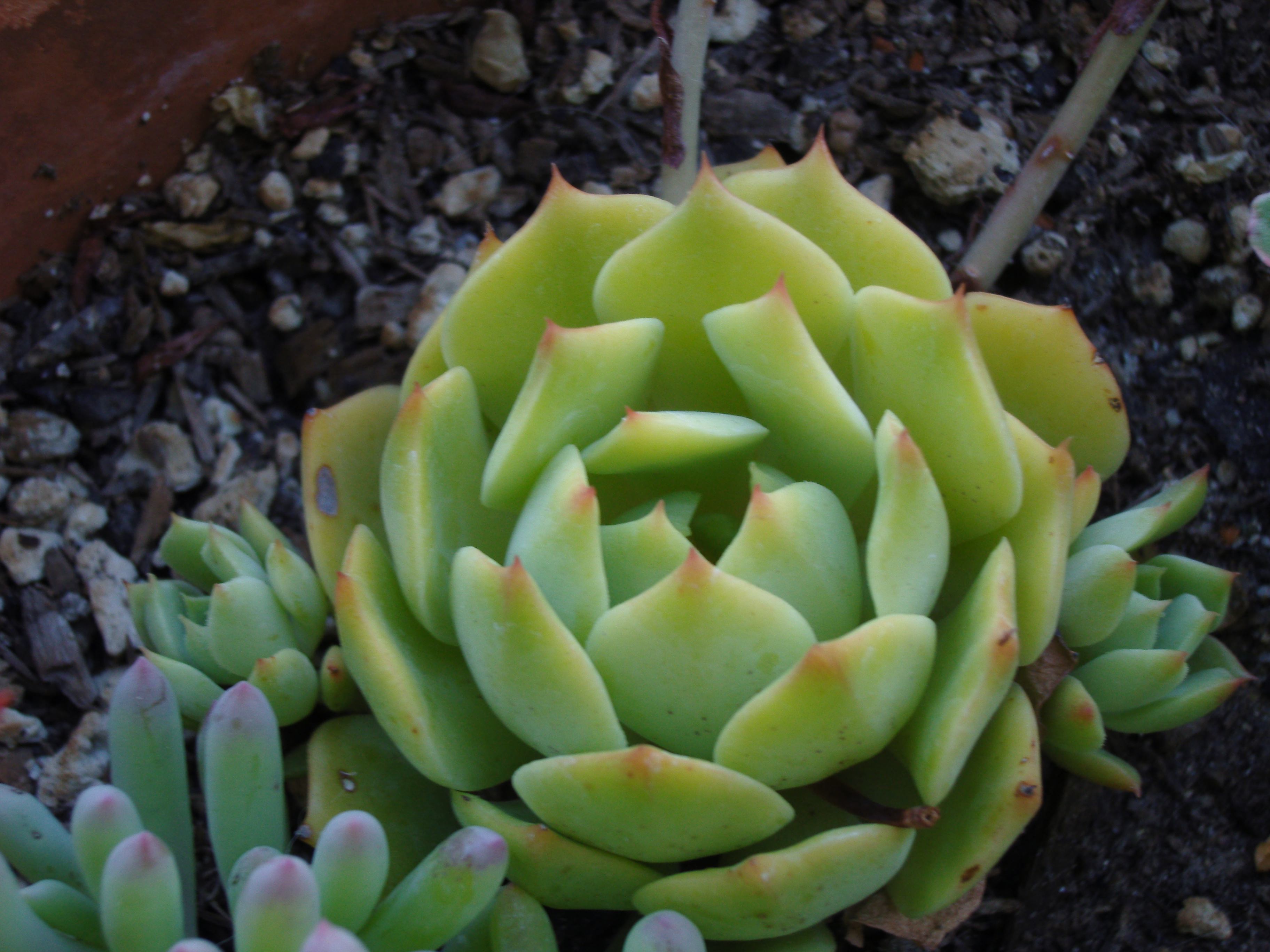
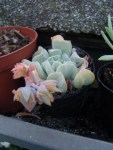
Echeveria with two pups

Deadheading Succulent Stems

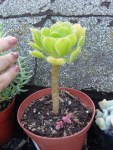
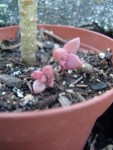
There are certain succulents that have to have their head’s chopped off at the end of their growing season since the rosette won’t survive anyway. If the stem is inspected carefully, there one might find little baby pups emerging. You need to keep your regular maintenance of the plant and the pups will continue to grow. At some point, you can remove them from the stem and plant the pups and plant them in soil. I thought my topsy turvy had died, since the leaves turned a weird color and the plant looked unhealthy. I took it out of the soil and washed the root under water and discovered pups! Here they are:

Topsy Turvy Pups (December 23th, 2011)
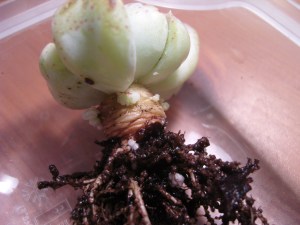
Topsy Turvy Pups (December 23th, 2011)
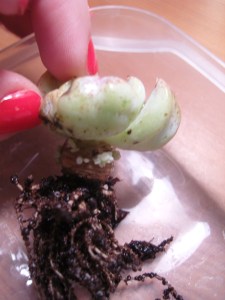
Topsy Turvy Pups (December 23th, 2011)

Topsy Turvey Pups (January 8th, 2012)
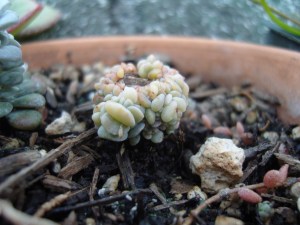
Topsy Turvey with pups (February 26th, 2012)

Pups on leaf still attached to the mother plant:

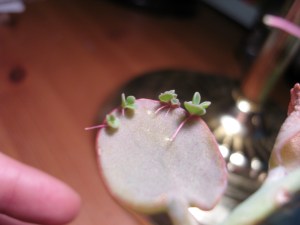
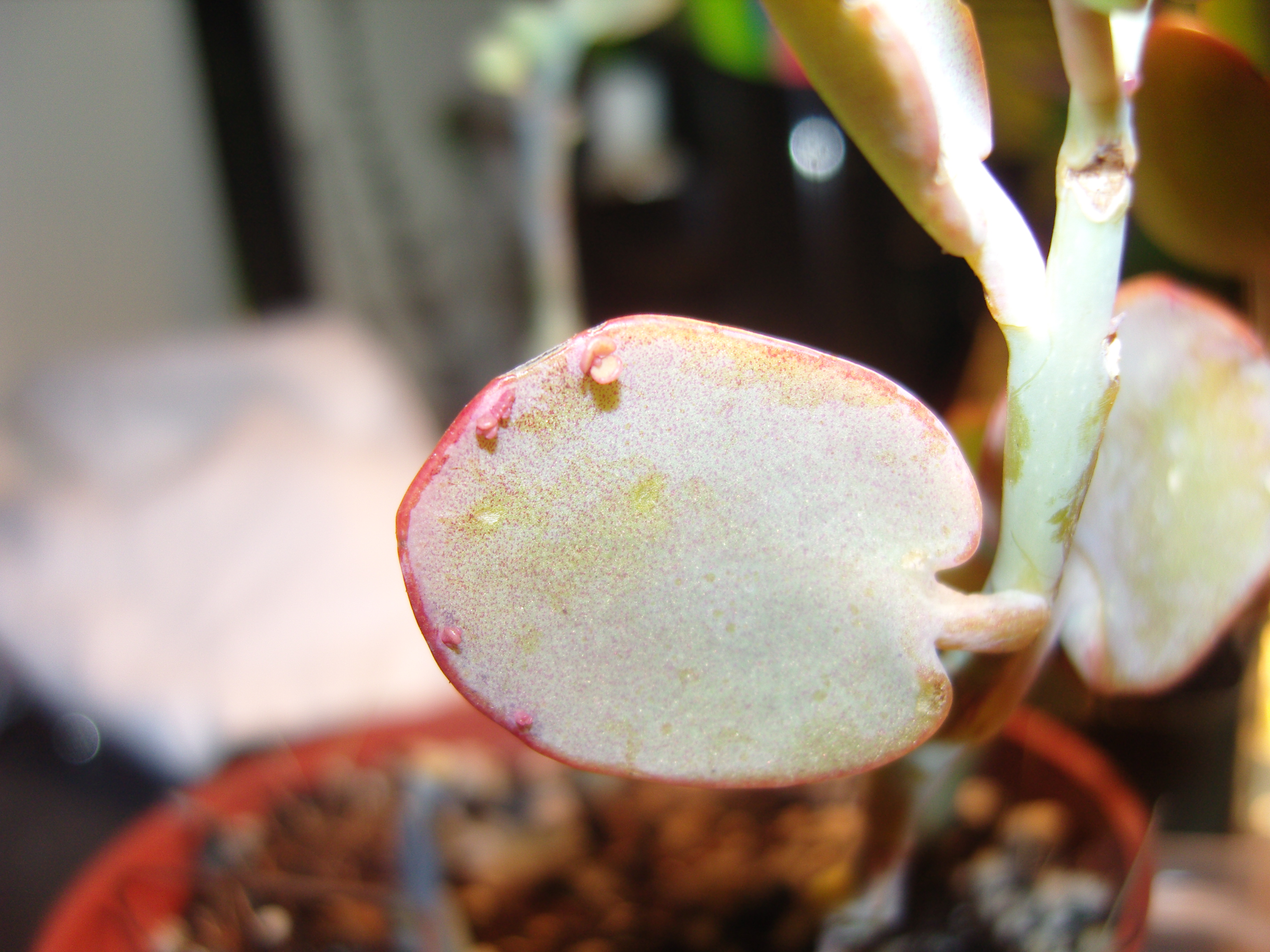
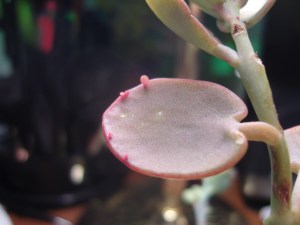
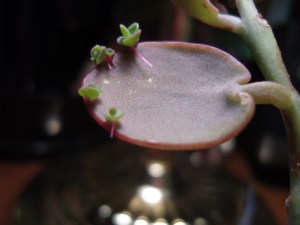
Here on my crassula arborescens, I noticed that there were little pups growing on one leaf. I’m going to monitor their growth and post updates on their progress.
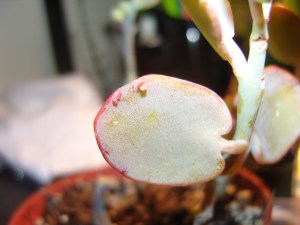
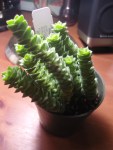
Crassula Arborescens offshoots on leaf January 22nd 2012
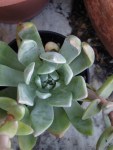
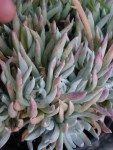
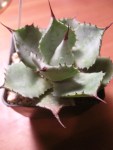
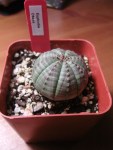
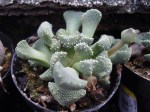
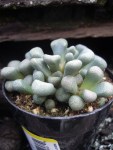
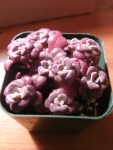
Collecting Succulents – More is more

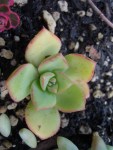
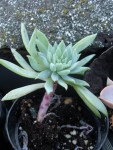
Here is my current collection of succulents I’ve amassed in the last few weeks. I’m not sure about the names of a few of them.  When I was carrying my latest additions up to my apartment, my neighbor joked, “You got more plants?  Haven’t you run out of room to put these?”   I backfired, “Well hey Rich, don’t you have enough records?”  I’ve caught glimpses a few times into his apartment and he has boxes upon boxes stacked on each other.  I guess my new collection is similar to ladies’s ridiculous porcelain doll collections…

I am continuing to add to my collection and seek seek out the more exotic varieties.  My rules are that they must have an unusual appearance and they must be small.  I’m trying to learn  to propagate my succulent plants and will write a post on this.

Go native or go home!

Wow, I am so thrilled I was able to snap some pictures of these great beneficial insects on my roof/patio!  Here is an update to the labeling.  Three months after the original post, I have been able to identify the weird “native bee” as actually a Hover Fly.

The Garden of Good and Beetles

This slideshow requires JavaScript.

Rummaging for Rose Hips in Downtown San Jose

We haven’t quite reached the end of summer even though it’s already almost November and everyone’s asking me what are my plans for Thanksgiving.

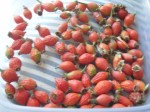
The Victorian house I live in is surrounded by lots of well established roses which had their rose petals fall already.  This week I looked up at the rose bushes and saw these beautifully vibrant colored rose hips.  So I did what any horticulture blogger would do!  I harvested some of them.  I will get my neighbors involved if I like the outcome.  After I collected them, I asked my buddy Mark for recommendations on how to use the rose hips.  I consider him to be an expert in this field as he is English and has experience with growing roses.  His reccomendation was to brew the tea with dried rose hips or fresh ones.  After smelling the fresh rose hips, I have decided to let them dry out first.

I’ve got the world on a stick

I got invited to a fabulous Burning Man party last weekend and as part of participating, we were asked to contribute food and drinks.  Here you can see, I’ve put Henrik (my new love) to work on building these caprese h’orderves on a toothpick.  Mozzarella and tomatoes were purchased at the store.  I will get my act together and grow my own tomatoes next season!  The basil came from my roof garden.  Nonetheless, everybody LOVED Henrik’s caprese h’orderves and couldn’t stop complimenting him on how delicious they were.  The party was a total success as well!  We all had a blast!  I even sang my first karaoke, which was Bohemian Rhapsody by Queen.  People did cheer me on when I hit the high notes, so I must have not sucked…  🙂

Henrik : the Capresinator

Giant Sunflowers

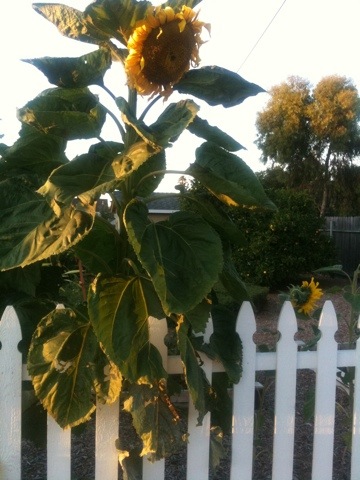
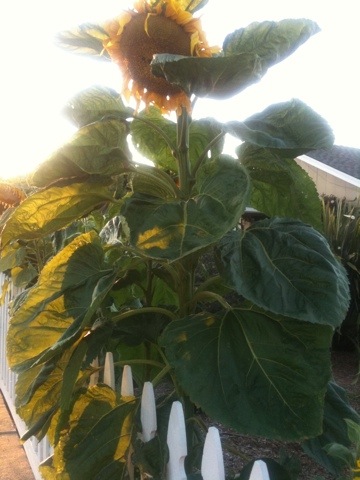
On my trip to Monterey to visit my dad yesterday, I found these giant sunflowers bordering someone’s yard. They are much taker than me.. > 5.1feet. Enjoy the pictures! Ps… The stems were so strong and thick that the flowers apparently did not need any vertical support.

20110919-015915.jpg20110919-015934.jpg20110919-015943.jpg

20110919-015951.jpg20110919-015959.jpg20110919-020006.jpg

Magical Purslane; a prolific and delicious green

I love this delicious salad green that has weed like properties because it is so hardy and easy to grow.

Where do I start?  I grew up eating purslane in Turkey where it would be served as a “mezze” appetizer before dinner.  Well, let me explain.  Mezze actually pertains to munchies to go along with raki (Turkish ouzo).  I’ve provided the recipe on the recipes page for you to try out.

Purslane tastes a little tangy.  It is apparently very nutritious.

High in Vitamin A, Vitamin C, Riboflavin, Calcium, Iron, Magnesium, Phosphorus, Potassium, Copper, Manganese, Thiamin, Niacin, Vitamin B6 and Folate

Here’s a brief description from Wikipedia

Portulaca oleracea (Common Purslane, also known as VerdolagaPigweedLittle Hogweed, or Pusley), is an annual succulent in the family Portulacaceae, which can reach 40 cm in height. About 40 varieties are currently cultivated.[1] It has an extensive old-world distribution extending from North Africa through the Middle East (called الرجلة or البقلة) and the Indian Subcontinent to Malesia and Australasia. The species status in the New World is uncertain: In general, it is considered an exotic weed; however, there is evidence that the species was in Crawford Lakedeposits (Ontario) in 1430-89 AD, suggesting that it reached North America in the pre-Columbian era.[2] It is naturalised elsewhere and in some regions is considered an invasive weed. It has smooth, reddish, mostly prostrate stems and alternate leaves clustered at stem joints and ends. The yellow flowers have five regular parts and are up to 6 mm wide. The flowers appear depending upon rainfall and may occur year-round. The flowers open singly at the center of the leaf cluster for only a few hours on sunny mornings. Seeds are formed in a tiny pod, which opens when the seeds are ready. Purslane has a taproot with fibrous secondary roots and is able to tolerate poor, compacted soils and drought.

If you’re into gourmet salads that you can’t even find at the fanciest of luxury organic superstores…try out purslane!  This is certainly exactly the ideal Urban – Horticulture plant.  Easty to grow, grows pretty quickly, reseeds, disease resistant….what more could an urban apartment dweller with limited gardening space ask for?

Recipe: Homemade Sriracha Sauce, Ode to a Rooster.

Recipe: Homemade Sriracha Sauce, Ode to a Rooster..

Really neat recipe if you grow your own chillies!  Way to impress your friends and family!


Design a site like this with WordPress.com
Get started