Beneficial Insects Poster By UC Davis
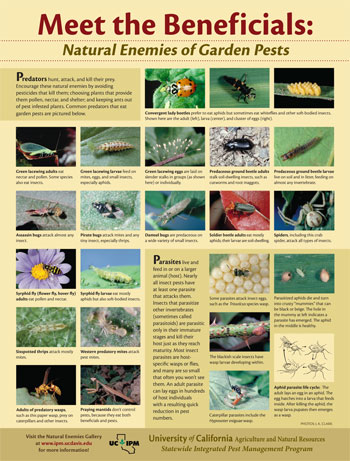
Click on the link to download
Reconnecting with Mother Earth in Silicon Valley.
Click on the link to download

The Soldier Beetle...it's a beneficial insect that eats aphids and their larvae! Woot woot!

Honey Bee Pollen Sacs
 January 25, 2012
 urbanhorticulture
 Leave a comment

European Honey Bee on the purple Anemone Flower
Honeybees are social insects that live in hives. Like all insects, bees have six legs, a three-part body, a pair of antennae, compound eyes, jointed legs, and a hard exoskeleton. The three body parts are the head, thorax, and abdomen (the tail end).
Bees can fly about 15 mph (24 kph). They eat nectar (a sweet liquid made by flowers) which they turn into honey. In the process of going from flower to flower to collect nectar, pollen from many plants gets stuck on the bee’s pollen baskets (hairs on the hind legs). Pollen is also rubbed off of flowers. This pollinates many flowers (fertilizing them and producing seeds).
All the members of the hive are related to each other. There are three types of honey bees:
Bees undergo complete metamorphosis. The queen lays an egg in a cell in the wax comb (all the immature bees are called the brood). The egg hatches into a worm-like larva, which eventually pupates into an adult bee.
January 11, 2012
urbanhorticulture
Leave a comment
I came across this guide on how to differentiate between Bees and Wasps. I have been planting flowers for the past year to attract bees and starting noticing different types of bees. Lo and behold, possibly half of the ones I was observing were actually wasps. PS. Wasps are beneficial insects too, since they eat pests. I learned quite a lot from this UC Berkeley guide below. Enjoy!
From: http://nature.berkeley.edu/urbanbeegardens/list.html
Bees Vs. Wasps
 Many gardeners and other urbanites often refer to bees and wasps interchangeably. As you become familiar with the organisms in your yard environment it is important to learn to distinguish bees and wasps as each of these insect groups has very different lifestyles. Bees are interested almost exclusively in pollen and nectar from your plants, and they are adapted evolutionarily to use these specific plant
 parts for energy (nectar) and to provision their offspring (pollen plus nectar). Wasps, in contrast, are mostly predatory and visit your garden searching for small prey items like caterpillars. Occasionally, small slender wasps can be observed taking nectar from selected flowers only, for example, from species of Eriogonum (shown at right), the buckwheats. In almost every case, these are beneficial wasps looking for a drink of nectar. They have no interest in the pollen. In fact, they don’t have body parts adapted for pollen transport as do bees.
The yellowjacket wasps (see above photo) are most often confused by urbanites. Yellowjackets are not bees! These wasps are predatory in habit, which means they hunt and feed on other living organisms, mostly other insects. Often, they fly around plants and even land on flowers where they look for prey items such as caterpillars. However, these wasps have also taken a liking to human food, especially meat and soft drinks. You may have already noticed that encounters with yellowjackets usually occur whenever we eat food outside. We can guarantee that you will never see an authentic bee eating a burger or hot dog.
 If you study the photos in this website you will begin to be able to distinguish between bees and wasps. Note especially the great amount of fine hair found on almost all bees in contrast to the sparse hair on wasps. It is their hairiness that makes bees so important to pollination and plant reproduction: these hairs are designed to pick up pollen and carry it from one flower to the next.
Finally, as mentioned elsewhere in this website, female bees and female wasps have stingers that are used in defense. Some wasps species also use their stingers to paralyze prey items, which are then used directly for adult food or later for food for their offspring, in the case of social wasps. When close human encounters with bees and wasps occurs, stings may result but this almost always happens when the insect feels threatened. This is even true in the case of the famous Africanized honey bee (or killer bee), which behaves more aggressively than most other bees and wasps in defense of their hives.
I have been promoting planting flowers to attract beneficial insects since I attended the Master Gardener’s class . Since moving to my apartment in August of 2011, I got involved with California Native Garden Foundation and learned the endless benefits planting Natives. I purchased a Dudleya from CNGF that is a succulent with beautiful yellow flowers. I split the plant into its two clusters. I kept one cluster for myself and gave the other cluster to my boyfriend Henrik as part of a beautiful succulent arrangement. He still gets lots of compliments from his friends over the arrangement. I should state at this point that Henrik only has one other plant on his patio and that is the African Daisy. And his plant’ is in a winter slumber at the moment with no flowers. So basically he has no plants on his patio to attract Beneficial’s on his patio in the Fall/Winter period. Well it’s been 2 months since we’ve had our Dudleyas and here are the results:


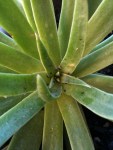

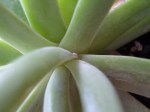
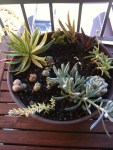
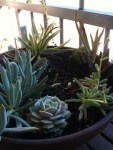
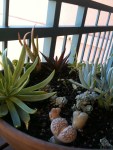
Bottom line: I haven’t had to use any pest control sprays of any kind on my patio this year! The Neem Oil pesticide I had bought a year ago was promptly gifted to Henrik to control his Aphid infestation on the Dudleya.
*Updates in Green
January 2, 2012
urbanhorticulture
Leave a comment
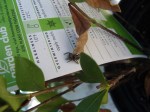
Wow, I am so thrilled I was able to snap some pictures of these great beneficial insects on my roof/patio! Here is an update to the labeling. Three months after the original post, I have been able to identify the weird “native bee” as actually a Hover Fly.


 October 31, 2011
urbanhorticulture
Leave a comment
October 31, 2011
urbanhorticulture
Leave a comment
About a year ago, I was fantasizing about my dream house. I was pondering weather to move back down to Monterey and live in Carmel. My dream house would be a tiny Hansel and Gretel cottage (preferably with all the candy bits) with a garden in the back twice or thrice the size of the main dwelling itself. There I would come home from work and spend most of my free time tending to my lusciously green garden.
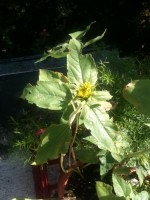
Alas, I’ve moved once again. Most of you might be guessing I am some sort of gypsy lady, but I promise you I am nothing of the sort. Life happens… Break ups happen. And now being on my own in my own studio apartment downtown I can focus on my real passion, which is the roof top gardening. It’s funny where life takes you. I had to find a new place to live quickly (and I think I found it within a week). I had put the word out and whether you want to call it karma or kismet, my good friend Geraldine found me her next door unit. It’s a tiny studio, however the “roof/deck” is perfect for my gardening. I get tons of sun which is a great blessing. I still have the same plants but added new loot to my collection from Lowes last night.
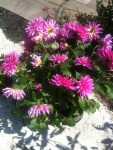
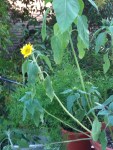
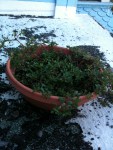
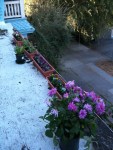
Here are a few pictures I snapped this morning.








 August 28, 2011
urbanhorticulture
Leave a comment
August 28, 2011
urbanhorticulture
Leave a comment
I was just watching a home video with Christian and got visited by a ladybug. So lucky to be attracting beneficial insects!

Lady Bug
August 5, 2011
urbanhorticulture
Leave a comment

 urban-horticulture